
A Bold New Vision & Transformative Outcomes
In an inclusive EAL program, a different vision prevails. EAL learners and families are welcomed, included, supported and successful. All teachers and schools are supported, educated, collegial and agreeably responsible for EAL learning. Language learners are respected for their dual or multi language achievements, and are fully supported in a system that is designed to enable their success across the curriculum. And beyond the classroom, learning continues on the metro, at home, and outside sitting on a step with friends!
The WLI EAL program is bold in its approach, and is fundamentally concerned with changing how students and teachers of English see themselves, and – in turn – how the world sees them. Our ISS Schools will be guided and supported in achieving these outcomes, and for that reason will stand apart from schools that follow a less inclusionary approach.
- We intend to inform and to transform monolingual and monocultural students into multi-lingual people who have insights into different cultural norms and beliefs. We want students to exit our schools with a confidence that they are prepared to encounter unknown situations gracefully and graciously. They will recognize that one can understand and navigate another way of interacting and communicating without diminishing one's own identity. In fact, one's identity becomes clarified through interaction with differences.
- Our students will be empowered to make thoughtful, purposeful decisions based upon evidence gained from experience and from research. Our students will know how to negotiate respectfully and effectively. Our students will be proficient in resolving conflicting points of view found in source documents and experiences. They will be able to plan and to collaborate – solving complex problems with no obvious answers. They will be equipped with skills to examine text and graphics in more than one language to infer, interpret and draw conclusions – so their decisions are solidly based and can be explained, supported and defended.
- Our teachers will seek to understand before seeking to be understood. We want teachers to recognize that there are multiple ways of approaching a subject/concept, and that students may have insights and understandings that could facilitate learning the content that the teacher intends to convey.
- We will develop independent learners who can apply their acquired skills with success and who can face unknown situations with confidence knowing that they possess effective strategies to deal with conflicting points of view and complex situations. We will equip them with critical and creative thinking strategies to evaluate situations and experiences. They will analyze and reflect upon their own values and beliefs as well as seeking to understand ideas on a global stage.
- People express differing points of view after actively listening and understanding the other point of view. Teachers sit together to plan lessons and units, to analyze student assessment results to inform their teaching points, and to use observation, student performance and conversations to gain insight into the learner and how to guide him/her to the next level of achievement. Teachers ask themselves, "What does/do this learner/these learners need next?" on a regular basis instead of using the table of contents in the text book as their guide for lesson planning.
- Students can explain what they are learning and why they are doing something as they are – not because the teacher told me to. Students understand how one skill fits into a larger concept and into an enduring understanding. Students articulate what they know, how well they know it, and what they do not yet understand well enough. Students value self-assessment as a means toward achievement, toward success, and toward becoming an independent lifelong learner. Students value working collaboratively as well as independently and have the flexibility to move easily between the two. Students have learned to receive new, and perhaps 'strange', ideas with an open mind before rushing to judgment.
- All teaches will be supported in achieving and working from a radically different mindset. Content area teachers will have acquired the theoretical and practical skills of teaching their discipline to both Native and Non-native English learners. They will expect to have non-native students in their classrooms and will view students as exceptional given that they are learning in an acquired language rather than their mother tongue. Their positive presumption will be that these students will achieve success in their courses they teach. Language teachers will be trained in best practices for language learning and managing the classroom environment. They will have access to resources to support these practices effectively, and which support differentiation. They will participate in professional communities within and beyond the school contributing to and learning from a growing body of research and resources for their field.
- Schools will subscribe to the belief that they must support bilingualism according to the language of their respective host country and, where possible, the range of mother tongues represented by the student body.
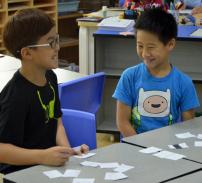
International School of Dongguan
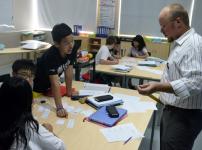
International School of Dongguan
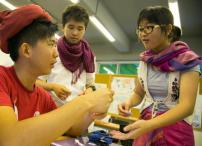
From the NCPA Silk Road Marketplace day, where students acted as merchants and only spoke in English. ©Jeremiah Boulware

NCPA Silk Road Marketplace Day 2013

- Home
- Blog
- Contact
- info@isswli.org
- Follow Us


- All Rights Reserved ©2012 International Schools Services
- Privacy Notice
- Terms and Conditions of Service