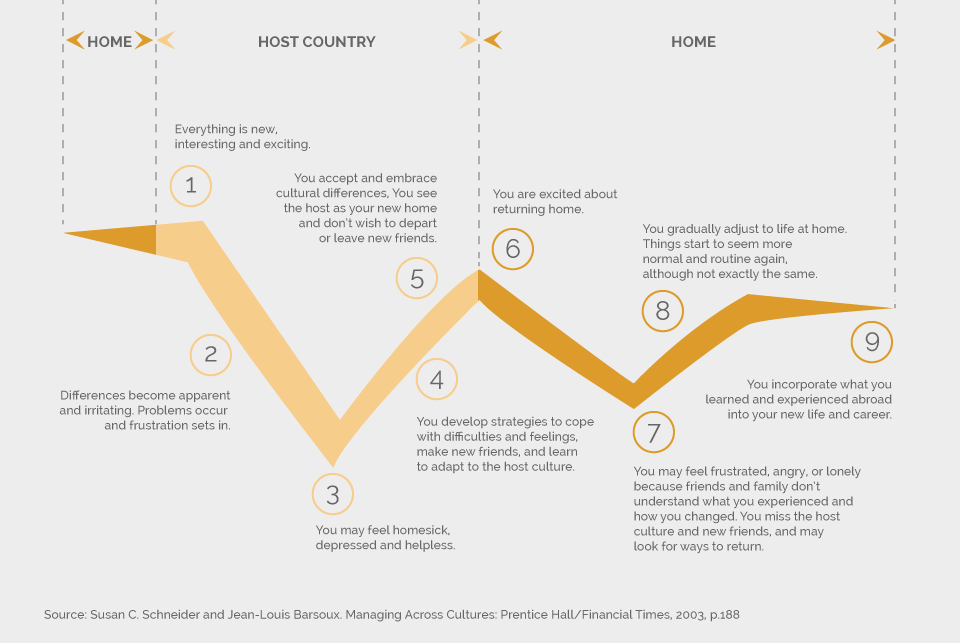
The Typical Life Cycle of Culture Shock
Useful tips, cogent insights and must reads before you travel.
Research shows that even self-described "saavy" travelers experience some symptoms of culture shock when living and working in a new country for an extended period of time. Part of dealing with it effectively is understanding how feelings of frustration, loneliness, etc. might manifest, and knowing what you are experiencing is part of a common experience when in a different culture - especially one that is significantly different than your own. Learn more about dealing with culture shock with these helpful hints from the University of Tennessee Health Science Center.
To acclimate to your new surroundings, consider these 10 tips for coping with culture shock, courtesy of travel blog Gadling.com.

Know what you're getting into before you go, or if you didn't before, then do it now. Research the web, buy some books, watch local movies, and learn the language. It will help you have some idea what you're getting yourself into. Note on learning the language: it will be hard at times and you'll feel like a two-year-old babbling incoherently, but not only will you gain a lot of insight into the culture by learning the language, you will also be able to function better. So, be prepared to look foolish and give it a try.

This can be the most important thing for surviving another culture, especially if this person becomes a close and trusted friend. This informant becomes the go-to when something happens that you can't make sense of, or if you have questions about what's appropriate or not. It's like having a "local culture dictionary" – and can be vital for your sanity's survival.

This helps in having someone who either is going through or has recently gone through a lot of the shocks you are currently enduring. You can vent with someone who knows what a public restroom should look like. Just be careful not to let it slide into a "hate everything about this country" session.

Celebrating the good of the new culture can help take some of the edge off the things you see as bad. Think of it as the things you'll miss when you go back home; and as hard as it is to believe at times of heavy culture shock, there will be plenty of things that you miss one day. Bonus: when you can find a positive aspect to the "squatty potty," then you know you've made progress.

Plan time to do the cheesy touristy things that the locals wouldn't be caught dead doing. It helps to be an outsider sometimes, because you can find wonder in things the locals don't even notice anymore. Sad to say, but once you see it day in and day out, those majestic mountains become just common place. So, before it becomes mundane to you too, stand in wonder at the wonders of the world. Extra points if you take a local with you and make him/her be your "tour" guide.

Eleanor Roosevelt is famous for saying this, and it's good advice to take. Besides, it's actually not that hard to do when you are somewhere foreign. Adventure surrounds you in another culture -- big and little. Taking courage can simply mean going to the market by yourself, but if you see it as an adventure, rather than a chore that will take you three times as long as it does in your own culture, you may actually find yourself having fun.

Figure out how to make your favorite food and do so often. Watch your favorite movies. Listen to music that makes you feel good in your own language. Have people over to celebrate your home culture's holidays your way. Sometimes you just need to close your eyes and hear, smell, taste the things that are home to you. It's amazing how good mac n' cheese can taste when you no longer have easy access to it.

Spend time exploring on foot. In your own culture, you take for granted how the trash is picked up, how the mail is delivered, the colors that the houses are painted, etc. Take time in this new culture to figure out how the minutia of life gets done and being on foot helps you to notice the little details, plus it gets you out of the house for a little exercise.

There's no better place to get it all out then on the pages of a book that no one else will see. It will also help for you to look back on it and see how far you've come, the humor in situations that weren't humorous at the time, and how you can help other newbies as they have the same problems. Consider taking this journal and sharing it in a blog form to help others as they transition, but be careful to gain some perspective before doing so. If you're in the ugly depths of culture shock, you may really hurt the local people with your mad ravings. Wait until you've cooled off; you'll be glad you did.

Ask someone--anyone--from home to send you the taco mix, chips, chapstick, shampoo, and wool socks that you can't find anywhere. It's amazing how great it is just to get a little care package with a few of your favorite candies, spices, drink mixes, t-shirts, scarves, etc. If you don't have anyone to ship them to you, then see if you can find a company that ships overseas. It may be a bit pricey, but it's worth it to have a few pieces of home every once in awhile.
So Where's Home? explores the unique perspectives and identities of Third Culture Kids, people who have spent a significant portion of their childhood overseas. The purpose of this short documentary project is to understand why third culture kids struggle to answer the question of “so where’s home?” and the implications this difficulty has on personal identity.

When they move overseas, some parents grow concerned that having their children learn the host country language may detract from time they could spend learning other subjects. ISS VP and longtime overseas educator Bruce McWilliams discusses the positive role learning the host country language can play in grounding your child, and maximizing their overseas experience.